Norrbotten – where Europe’s space infrastructure takes shape

Space can sometimes feel distant – but in Norrbotten, it is part of everyday life. Here, satellites are built, research is conducted on the atmosphere, and rocket technology is tested, contributing to both sustainability and social development on Earth.
This became clear during the Space Innovation Forum, which in September brought together participants from Sweden, the Nordic region, and Europe. Over two days, participants discussed the role of space in our economy, our climate and our society – from global investments to regional opportunities.
European leadership in space innovation
Space is one of Region Norrbotten’s priority development areas, and the Norrbotten Regional Innovation Centre leads the European S3 partnership in space. Lina Linde, who heads the European S3 Space partnership, emphasised that Norrbotten has an important role to play in showing how European regions can collaborate on space innovation – by linking research, industry and societal benefits.
‘Within the partnership, we are working to strengthen European cooperation in space innovation on a global arena,’ says Lina Linde.
No rocket science, no social benefits?
Satellite data is used for everything from agriculture to infrastructure planning, crisis management, your banking services and, not least, the series you stream on Friday evenings. But to have reliable access to satellite data, you need a chain of infrastructure, knowledge and services that can develop, test and launch satellites.
Space Sweden North – Norrbotten’s space partnership
The conference is organised by Space Sweden North, an innovation partnership run by Luleå University of Technology, IRF, SSC, and EISCAT – the region’s leading players in research, testing and talent supply, together with the business development company LTU Business and the business incubator Arctic Business, representative of ESA BIC Sweden. Space Sweden North is also funded by the EU, Sparbanken Nord, Region Norrbotten and Kiruna Municipality.

When MEP Sofie Eriksson closed the conference, she summed up the message:
‘If Europe wants an independent supply chain in space, we must research, manufacture and launch European. Kiruna already has the capacity and experience to do this.’
Discover the Norrbotten space region
From Esrange to EISCAT, from satellite data to climate research – Norrbotten has built an infrastructure that makes the region unique in Europe.
Space is not far away. It is here. And it is part of our shared future.
Read more about Space Sweden North here.
Innovate tomorrow’s Europe with us
Norrbotten Regional Innovation Centre is a collaborative platform to accelerate societal transformation in a smart and sustainable way. This will be done through inter-regional European co-operation. The focus is on further developing innovation in five ecosystems identified by Region Norrbotten as strategically important: mining industry, hydrogen economy, space technology, tourism and information and communication technology (ICT). Let’s join forces for a smart and climate-neutral society.
Building the Hydrogen Economy – in Norrbotten
While much of Europe is still talking about hydrogen as the energy carrier of the future, that future is already taking shape here.
In Norrbotten, hydrogen is moving from research to large-scale industrial reality – and the region’s progress is drawing attention far beyond Sweden’s borders.
Hydrogen is no longer just a promise of what will come, but a key part of the transformation that is already happening. For Region Norrbotten, it is also a priority area within the region’s Smart Specialisation Strategy – a strategic focus on regional strengths to drive sustainable growth and competitiveness.
From European stages to regional collaboration
During the spring and summer of 2025, Cecilia Wallmark, Director of the Centre for Hydrogen Energy Systems Sweden (CH2ESS) at Luleå University of Technology, has highlighted Norrbotten’s role as one of Europe’s most dynamic regions for hydrogen development.
“In Norrbotten, more than 20 projects are already underway – from HYBRIT to Stegra – a tremendous knowledge base that others can learn from and build upon.”
In Brussels, she presented how northern Sweden is taking hydrogen from research to industrial scale, and on stage at Almedalen Week, she addressed what it takes for Europe not only to plan but to actually build a functioning hydrogen economy:
“We need to close knowledge gaps – not only within technical fields like energy systems and materials, but also in safety, social acceptance, and governance. And we need to learn from each other. In Norrbotten, more than 20 projects are already underway – from HYBRIT to Stegra – a tremendous knowledge base that others can learn from and build upon.”
A growing knowledge environment
That knowledge base was at the heart of CH2ESS Research Days 2025, held at Luleå University of Technology in August. More than 120 participants – from academia, industry, and the public sector – gathered to exchange insights, forge partnerships, and look ahead to the next phase of the hydrogen transition.
“It’s fantastic to listen to all these people and imagine where we might be in ten years,” said Cecilia Wallmark in her opening remarks.
The two-day programme reflected the breadth of hydrogen research and innovation – from production, storage, and distribution to safety, regulation, and market conditions. Topics included market barriers and opportunities for hydrogen carriers in northern ports, natural hydrogen exploration, non-critical raw materials for hydrogen production, and safety aspects related to fire and explosion risks.
Participants also explored energy law and permitting processes, hydrogen in transport and industry, the role of agriculture in local hydrogen production, and education and skills development for a future hydrogen workforce.
Among the speakers, Professor Maxwell Meju, an expert in natural hydrogen exploration, reminded the audience that “the future is bright – although not so easy.”
Associate Professor Linda Wårell highlighted how market barriers differ across sectors, and how policy decisions at regional, national, and EU levels will ultimately shape the pace of hydrogen deployment.
Why hydrogen matters
For Norrbotten, hydrogen is not only a technological issue. It is a way to build a robust and sustainable energy system, reduce emissions, and strengthen regional competitiveness in a new industrial era.
Hydrogen is an enabler – for fossil-free steel production, for sustainable transport, and for a circular energy economy that thrives through cooperation between academia, business, and the public sector.
That is why Region Norrbotten is making long-term investments in collaboration platforms, knowledge sharing, and innovation capacity in the hydrogen field. The expertise already present in the region is a unique asset – not only for Norrbotten, but for Sweden and Europe as a whole.
Explore Norrbotten’s Hydrogen Projects
Want to learn more about the projects, companies, and research environments driving hydrogen development today? Explore the Hydrogen Map – an interactive tool showing where the capacity is, which actors are involved, and how the infrastructure is evolving across the region.
👉 Explore the Hydrogen Map here
Norrbotten is building the future – a hydrogen economy in practice.
Innovate tomorrow’s Europe with us
Norrbotten Regional Innovation Centre is a collaborative platform to accelerate societal transformation in a smart and sustainable way. This will be done through inter-regional European co-operation. The focus is on further developing innovation in five ecosystems identified by Region Norrbotten as strategically important: mining industry, hydrogen economy, space technology, tourism and information and communication technology (ICT). Let’s join forces for a smart and climate-neutral society.
Cold, Remote, Connected: Europe’s Arctic wireless platform is a demonstration of place-based innovation and interregional cooperation
The coming release of OECD report “Building Resilience to Global Transition in the Northern Sparsely Populated Areas” provides crucial insights and over 100 recommendations for Norrbotten and 13 neighbouring regions in Sweden, Finland, and Norway that make up the NSPA (Northern Sparsely Populated Areas).
It highlights both shared challenges and unique opportunities for innovation, sustainability, and economic development in the European Arctic. In light of the report, there are also important lessons on building cross-border innovation ecosystems that other EU regions should take inspiration from.
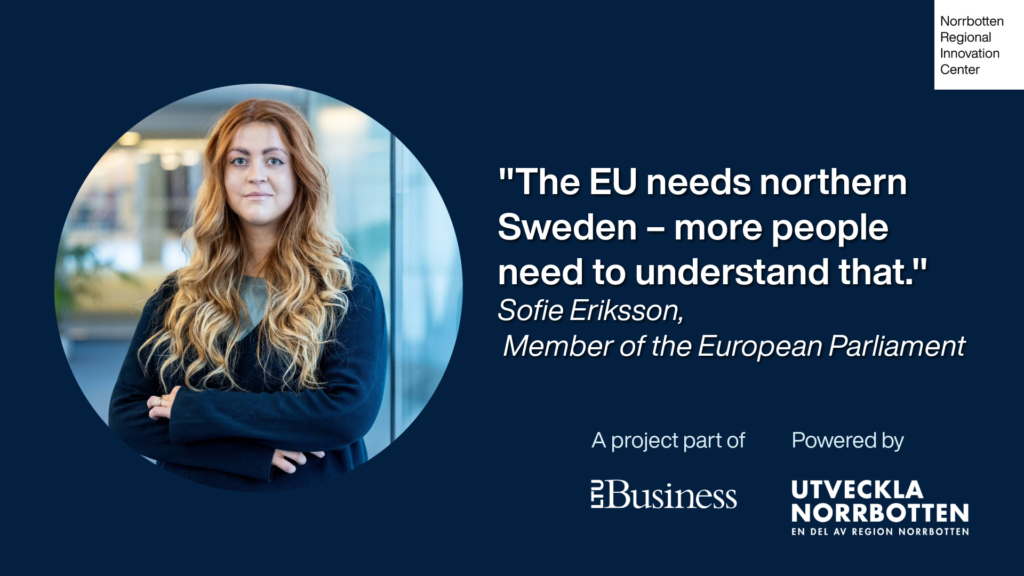
Sofie Eriksson, MEP, highlights the importance of raising awareness in EU about northern Sweden:
– The EU needs northern Sweden – more people need to understand that. Without the raw materials, experience, and expertise from these regions, industry on the continent won’t function either. It is crucial that the OECD, given its position, highlights how much northern Sweden contributes and that there is, therefore, a shared EU interest in ensuring that the region can truly thrive.
Innovation by necessity: How local conditions in northern Scandinavia drive wireless breakthroughs
Northern Scandinavia’s harsh climate, vast distances, and sparse population pose significant challenges—but also drive groundbreaking wireless innovation.
For more than thirty years, the mantra of Luleå University of Technology’s Center for Distance-Spanning Technology has been “better than being there” – striving to develop technology that is state-of-the-art when it comes to overcoming physical distance.
This mission coupled with bold and early investments in broadband infrastructure made the Norrbotten region a pioneer in developing and deploying virtual meetings, leading to university spinoff Marratech that was purchased by Google in 2009.

When conventional solutions fail, necessity sparks new technology, making the region a leader in broadband expansion, autonomous transport, and satellite communication.
Cross-border collaboration between academia, industry, and policymakers has turned this remote area into a testbed for cutting-edge solutions, offering valuable insights for the EU regional innovation community.
– Digitalization is key to quality of life and societal development in rural areas. Yet, as a consumer market, our local geography and demographic conditions require technology adaptions or even brand new solutions. We partner researchers and labs with the needs owners, business sector and funding agencies to make it happen, says Björn Backe, Director of the Center for Distance- Spanning Technology at Luleå University of Technology.
Technology for communities, industries and local businesses
New wireless industrial applications see the light of day in the underground testbed, the forthcoming 6G test site or the NorthStar Innovation Programme, developed jointly with industry partners and sector technology providers.
In other projects, researchers collaborate with Baltic regions to upscale smart cities into smart regions; and work with local authorities in northern Sweden to explore ways to improve public services such as mobility and accessibility to transport in rural areas.
Supporting resilience and competitiveness in the local business community, the university also run tailored projects such as Green Transition North, raising awareness and supporting the local small- and medium enterprises with advanced technology that allows for circular supply chains and fossilfree energy systems.
Cross-Border Collaboration as a Success Model
Strong Nordic cooperation fuels innovation. Institutions like the University of Oulu and Luleå University of Technology, alongside companies like Ericsson, ABB and Telia, pioneer wireless advancements. The early 2000s Living Labs initiative made Norrbotten a global digitalization leader, proving that user-driven innovation can accelerate EU-wide R&D success.
The engagement from these stakeholders is a thriving nursery for tech SMEs, supported by the local and regional governments by creating physical innovation environments close to academia, as well as anchoring wireless technology in long-term strategies for the region, such as the smart specialization strategy for Norrbotten.
Another example of the close collaboration between the regions is the joint leadership of the European S3-partnership on wireless technology as well as an impressive portfolio of Interreg and I3 projects.
The Future of Arctic Connectivity
Michael Nilsson has a long experience driving wireless technology innovation ecosystems, currently in the realm of Center for Distance-Spanning Technology. For the future of connectivity in the Arctic – and Europe – he champions SME support, collaboration and place-based approach to harness the opportunities.

– The transition to 6G will expand possibilities in e-health, autonomous systems, and creative industries like AR/VR. Security and resilience will also be at the forefront of future innovations. Cybersecurity measures must ensure that autonomous systems —whether in transportation, industry, or energy—operate without exposure to external threats. The EU’s ongoing work on digital resilience strategies can benefit from the region’s experience in building secure, high-performance networks in extreme conditions.
By embracing this approach, the EU can strengthen its leadership in next-generation digital technology. Northern Scandinavia exemplifies how necessity drives technological breakthroughs, with its self-reliant yet collaborative model proving that innovation flourishes at the intersection of resilience, cooperation, and forward-thinking policy.
However, for these innovations to spread across the region and achieve widespread adoption, more is needed. Norrbotten alone spans an area three times the size of Belgium and relies heavily on exports.
To ensure that innovative companies and emerging sectors in the region remain competitive, critical infrastructure investments—such as resilient wireless networks and 5G corridors—are essential.
Are you a fan of regional innovation?
Norrbotten Regional Innovation Center is a collaborative platform to accelerate societal transformation in a smart and sustainable way. This will be done through inter-regional European co-operation.
Meet Per Erik Andersson, the man behind Norrbotten Regional Innovation Center

Per Erik Andersson, strategist at Sweden’s northernmost regional development authority, Region Norrbotten, is the man behind Norrbotten Regional Innovation Center. The initiative will not only strengthen cooperation between local actors in areas such as mining, space technology, tourism, wireless ICT and hydrogen, but also lead to new European partnerships in each area. During a long career in regional development and EU policy, Per Erik Andersson has been responsible for Norrbotten’s two most recent innovation strategies and is currently working on a new one. Here he explains the idea behind a cross-sector regional innovation platform.
Why is an initiative like Norrbotten Regional Innovation Center important right now?
An investment in the Norrbotten Regional Innovation Center is crucial to strengthen the region’s economic position, promote innovation and sustainability, and attract investment and skills in a time of change and uncertainty.
What makes Norrbotten a leading innovation region in the EU?
The region has a strong base in the nature-based economy, which is an important part of the economic fabric and contributes to livelihoods in Europe. Norrbotten and its platforms can act as catalysts for innovation and regional development, strengthening the region’s position as a leading player in Europe.
What does a new collaborative platform hope to achieve?
Norrbotten Regional Innovation Center aims to increase inter-regional partnerships and innovative collaborations in Europe, as well as to amplify innovation in the supply chains of which Norrbotten is part. Norrbotten is strong in raw material production and innovation. This collaboration is expected to lead to increased visibility, sustainable development and a stronger network of collaborations.
Before the holidays, representatives of Norrbotten’s five smart specialisation areas (mining, space, wireless ICT, tourism and hydrogen) met. What insights will you take with you into the new year?
Cooperation between different actors, both local and international, is important. Through networks and partnerships, Norrbotten can attract investment and expertise, which strengthens the region’s ability to develop new ideas and innovations. Therefore, it is crucial to create platforms for cooperation and knowledge exchange to drive Norrbotten’s development forward.
LTU Business is the host organisation for Norrbotten Regional Innovation Center, a project funded by Region Norrbotten.
Finansiär

Meet us at Nordic Hydrogen Valleys Conference 2025
All Nordic countries, on all levels, are working to realise the hydrogen society, where Nordic hydrogen valleys and hot spots are key. Nordic Energy Research invites you to discuss elements related to hydrogen valleys – from Nordic decision making and collaboration, to utilising regional strengths in industry and geography.
Join us at the next Nordic Hydrogen Valleys Conference, where you will have excellent opportunities to interact with and learn from decision makers, hydrogen researchers, and industry professionals.
Shaping the realisation of hydrogen valleys in the Nordic region
Why are the Nordics collaborating on hydrogen valleys? What are the priorities in the Nordic countries and among decision makers? How are these priorities aligned with national energy and climate targets? What desicions are first movers making and how soon will we experience their impact? At the Nordic Hydrogen Valleys Conference 2025, these questions are up for discussion, in relation to topics such as:
Nordic decisionmakers on building hydrogen value chains
Lessons from hydrogen researchers: insights and answers
Mapping Nordic hydrogen valleys: highlighting Nordic strongholds
Registration
Welcome to the team, Olov!
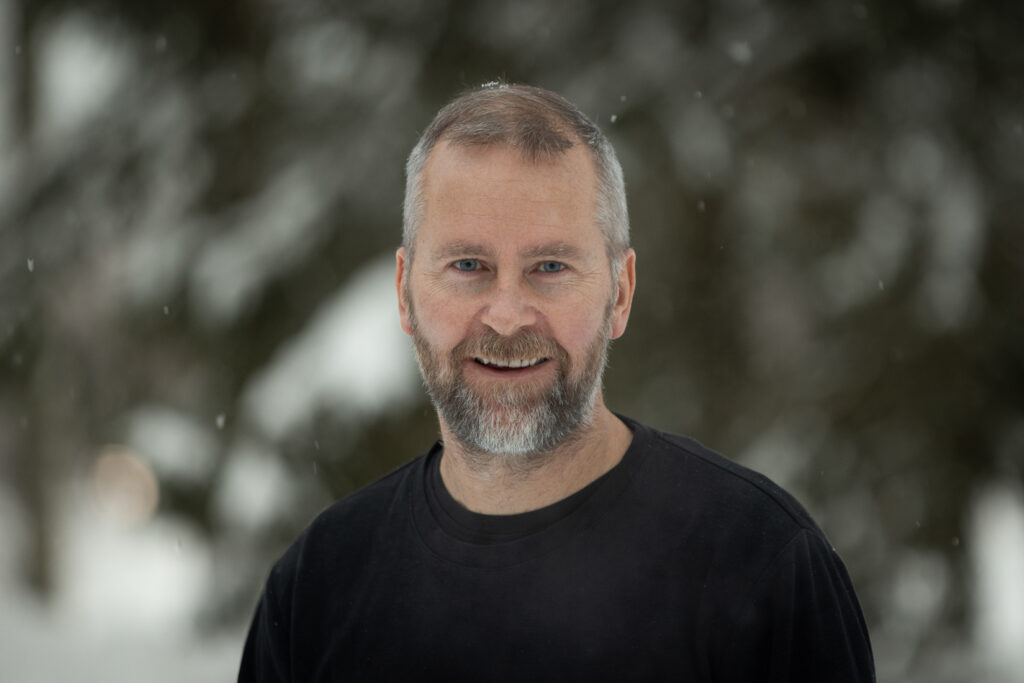
Olov Hultdin is joining our Skellefteå team as senior business developer. He has a long experience within the field, most recently from a privately owned investment company in Skellefteå, No Plan B Invest, where he ran an entrepreneurial school and was involved in two startups, T2 and Green Flight Academy. Olov has a Master of Science in Engineering, specializing in Industrial economics.Hi Olov! Tell us about your role at LTU Business
I want to continue working on helping companies achieve sustainable profitable growth. And perhaps even more than before from an innovation and sustainability perspective. My job involves finding opportunities and problems with our customers. And then helping them to take advantage of the opportunities and solve the problems. I believe the unique access to excellence through Luleå University of Technology and our own expertise here at LTU Business will provide great value to our customers.
What are you most looking forward to?
To learn more about innovation and sustainability. It will be super exciting and I feel that I am in the right place for it.
What is your most important driving force?
To make a real difference when it comes to sustainable growth in Norrland. And having fun in the meantime. I am originally from Malå, so I am passionate about the community development in the hinterland provinces of northern Sweden.
What makes you laugh?
British humor like Fawlty Towers.
We’re delighted to have you on the team, Olov!
Fast Track – an SME programme to boost growth
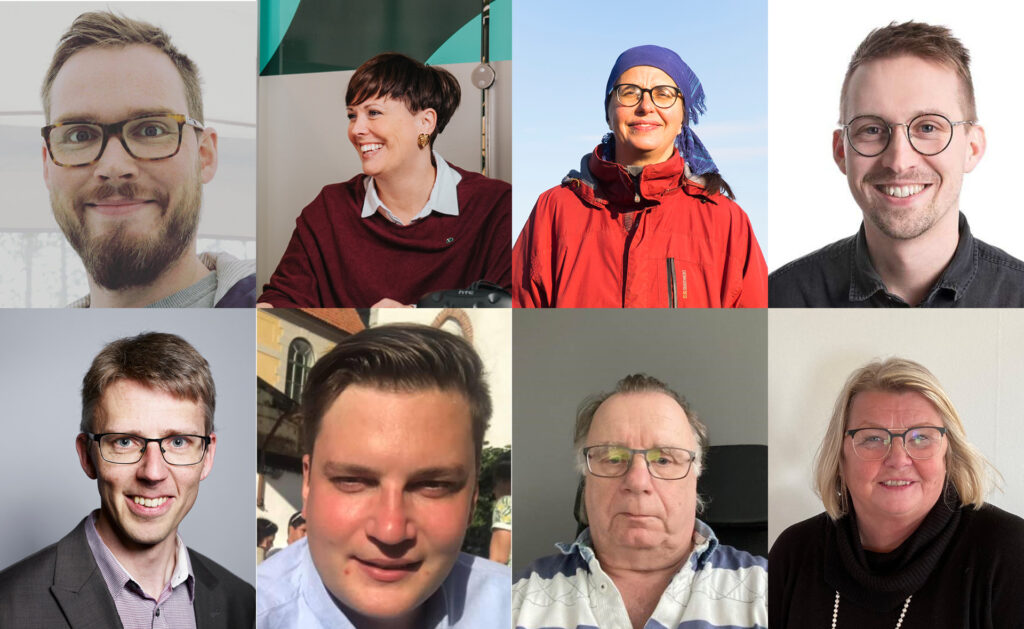
Participants of the 18-months long diploma course Fast Track get new insights and tools to drive change in their businesses, with focus on growth through for example product development or strategy. Fast Track, now in its’ second rendition, was initiated by LTU Business and Luleå University of Technology.
The participants are individuals with a management position in a company based in Sweden’s northernmost area.
Emma Norrfors, business development manager at LTU Business, has been in charge of recruiting candidates and match-making them with business coaches.
– In Fast Track, the companies get support with analysing their business, as well as identifying the best strategies going forward, all in close collaboration with scientists at Luleå University of Technology and professional business developers”, Emma explains.
Eight small and medium enteprises from industries ranging from construction and manufacturing, through healthcare and food production participate in Fast Track.
Fast Track is led by Anna Öhrwall Rönnbäck, professor and Head of Product Innovation at Luleå University of Technology.
– Close partnerships between the companies and universities benefits the business community overall as well as the economic growth on a national scale. Our ambition with Fast Track is to create fast, sustainable growth for each of the participating companies, and eventually that the concept is introduced to other regions, Anna says.
Background
Fast Track runs from September 2020 to December 2021 as part of the regional developmnet project Samverkan för Innovation och Regional Tillväxt (Cooperation for Innovation and Regional Growth). The project is initiated and operated by Luleå University of Technology in partnership with LTU Business, with sponsorship from EU/ERUF, the Swedish Agency for Economic and Regional Growth, Region Norrbotten, Skellefteå Municipality and Luleå University of Technology.
Related news


New programmes to boost tourism entrepreneurs
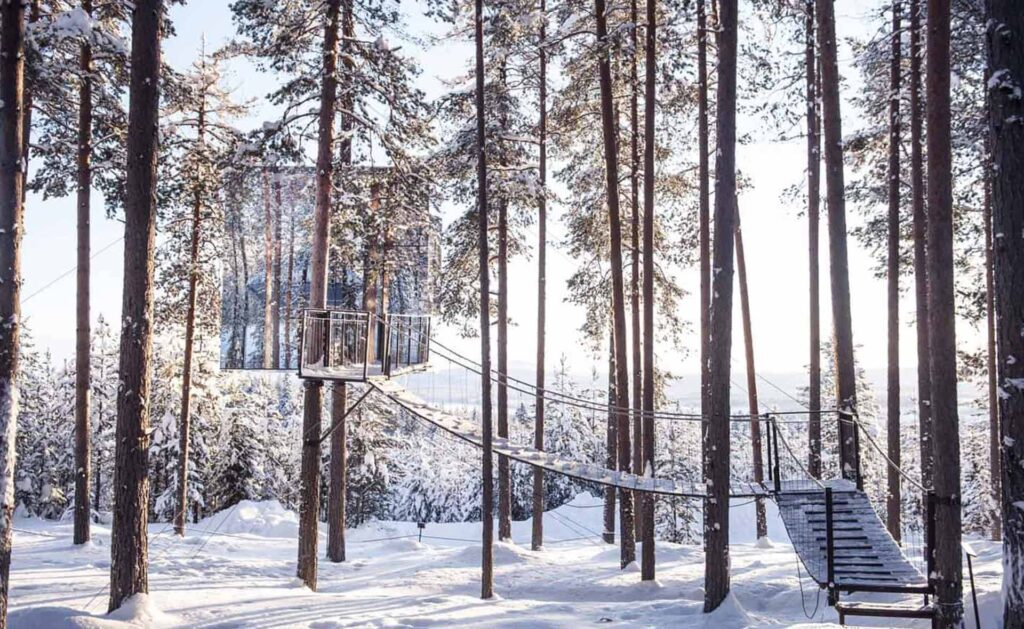
LTU Business is launching two new programmes for tourism entrepreneurs in Swedish Lapland, starting 2021. The highly appreciated design-focused Turistanläggningars Form & Funktion has attracted over 60 tourism businesses over the years – among the the world famous concept hotel Treehotel as well as eco-champions Camp Ripan. This spring also sees the premiere of business development programme Besöksnäringens Tillväxtakademi – tailored for CEOs in the tourism industry.
The news are met with joy as the industry is fighting for its survival following the Covid-19 pandemic, which has hit Swedish Lapland tourism suppliers particularly hard because of their high proportion of international guests.
– In our conversations with entrepreneurs in the area, the demand for tools to support innovation to adapt and develop new products and markets are stronger than ever. We are incredibly pleased and excited to have secured the funds to meet these needs, says Monica-Äijä-Lenndin, in charge of Turistanläggningars Form & Funktion.
Both programmes aim to boost competitiveness – one with focus on customer experience and concept development together with carefully selected designers and architects and the other – new for this year – with focus on business strategy and analyses.
Both programmes are held in Swedish and open to tourism suppliers based in Swedish Lapland.
Partners

The latest news
Show more
Norrbotten in Europe’s New Strategic Geography

Norrbotten – where Europe’s space infrastructure takes shape

Building the Hydrogen Economy – in Norrbotten

OECD calls on Sweden, Norway and Finland to strengthen cross-Border cooperation

Shared Growth, Shared Responsibility: Norrbotten in Brussels

“The relationship with the EU is central” – Markus Odevall, LKAB
AI to navigate space exploration in new innovation partnership

A new Swedish research partnership will develop game-changing AI-technology for space exploration. The partnership between Luleå University of Technology and OHB Sweden is the latest of 13 new space research and development partnerships launched by RIT2021.
Robotics x space engineering
Space organizations around the world are in a race to develop a technology that makes it viable to send missions to small space objects like asteroids and comets. These objects provide scientists important facts about the origins of life on Earth. They also hold precious metals like iron, gold and platinum that could be used for space construction or be brought back to Earth. The current technology makes it difficult and unprecise to explore small space objects – and therefore unviable as space missions. Something Avijit Banerjee, George Nikolakopoulos at Luleå University of Technology and Per Bodin at OHB Sweden are hoping to change by developing autonomous navigation systems based on artificial intelligence.
Launched by RIT2021
The new research project is funded by RIT2021, a multi-layered injection into the space ecosystem encompassing a budget of 5.6 million Euro. A key focus in RIT2021 is to drive innovation by increasing industry-academia partnerships in research and development. Thus far, RIT2021 has successfully launched 13 such joint collaborations between Luleå University of Technology and space industry partners since 2015. Johanna Bergström-Roos, space specialist and senior project manager at LTU Business runs the EU-funded project, which is a partnership between 12 organisations. She points out that partnerships like these are essential for innovation because their outset and focus create unique benefits.
“The industry gains strategic insights that are important for the future, while academia gets unique opportunities and resources for research. Meanwhile, the very projects themselves job growth and create career opportunities that benefit individuals as well as employers”, says space specialist Johanna.
Read the full story over at ritspace.se
Background
RIT2021 is a regional development project in operation 2019-2021, aiming to boost innovation and cooperation in the space sector. RIT2021 is operated by Luleå University of Technology, LTU Business, The Swedish Institute for Space Physics, Arctic Business and ESA BIC Sweden, with support from SSC – Swedish Space Corporation, OHB Sweden, GKN Aerospace, Region Norrbotten, Luleå Municipality, Kiruna Municipality, Sparbanken Nord & EU. More info on ritspace.se
Related news


Further improving the mining industry through NEXGEN SIMS
Solutions for battery-powered mining machines, virtual training environments, 5G communication and drone technology are among the latest breakthroughs in the development of the mining industry. This success is sprung from the recently concluded innovation project SIMS (Sustainable Intelligent Mining Systems). LTU Business now wants to continue the efforts together with industry and academia in a new project: NEXGEN SIMS.
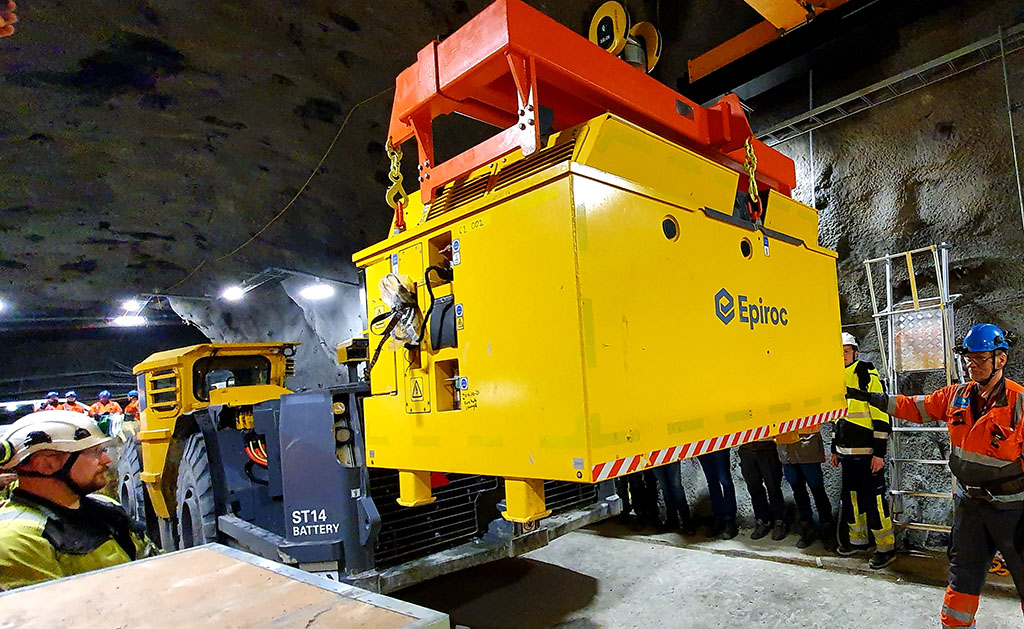
A new generation of battery-powered underground mining machines was tested in Agenico Eagle´s Kittilä mine in Finland in the autumn of 2019. The tests showed great production results and positive health effects for the operators, with an almost silent and vibration-free operation, and improved air quality. Photo: Niclas Dahlström
The completed SIMS project has since its start in 2017 shown that the mining industry can become more sustainable, and that the mine can be made an even more attractive workplace – with the help of autonomous drones, underground 5G technology and battery-powered vehicles.
– Lots is happening in the mining industry in terms of safety, sustainability and efficiency. Modern battery technology replaces diesel, and a higher degree of automation leads to improved safety. Luleå University of Technology conducts research in several areas that are useful for these efforts, says Jenny Greberg, associate professor of mining and quarrying technology at the university, and participant in SIMS.
– Digitizing the mines with smart systems that can communicate with each other will streamline production and create a more sustainable mining industry. We will see more precise mining, less energy consumption, waste and water use, says Jan Gustafsson, senior project manager at the industrial group Epiroc and project coordinator for SIMS.
The SIMS project has received lots of attention both within and outside of Europe. LTU Business and Niclas Dahlström have played a large part in this. – Jenny Greberg, Luleå University of technology
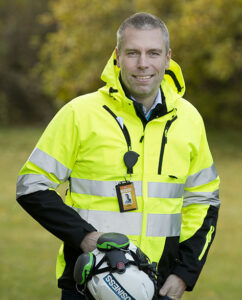
Niclas Dahlström, senior project manager at LTU Business. Photo: Viveka Österman
LTU Business’ senior project manager Niclas Dahlström led the work of communicating SIMS and the project’s results with the world – partly through immersive virtual reality experiences. Now the project owners are hoping for a part two: NEXGEN SIMS, which means a bigger role for LTU Business also including business development of innovations sprung from the project.
– The SIMS project has received lots of attention both within and outside of Europe. LTU Business and Niclas Dahlström have played a large part in this. The work of disseminating the results via digital channels, video and VR environments has been very effective and we look forward to a continued future collaboration, says Jenny Greberg at Luleå University of Technology.
– We are proud to have contributed to the SIMS project. We look forward to bringing that specific experience and our broad international experience of mining innovation into the next project, says Niclas Dahlström.
Three years ago, an announcement in the EU’s largest innovation program Horizon 2020 made it possible for the mining industry and academia to develop and apply new mining technology through SIMS. The EU’s response to the application for NEXGEN SIMS is expected in early 2021.
– Now we are hoping for a positive response from the EU, concludes Niclas Dahlström.
Facts:
The SIMS innovation project began in 2017 and lasted three years. The total budget was SEK 168 million, with the EU providing the bulk of the funding through its framework program for research and innovation, Horizon 2020. Of the total budget, close to SEK 37 million funded Luleå University of Technology’s research, development and innovation of intelligent mining systems. SIMS’ goal was to develop the mining industry in the EU with a focus on growing employment and improving operations in terms of sustainability, safety, and more.
Learn more about the SIMS project at simsmining.eu.
Related news